Showing all 4 results
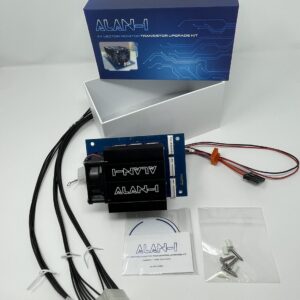
WARNING! Please review and follow our detailed installation instructions and video. Unlike the original TUK, installation requires removing the monitor from the game. Alan-1 is not responsible for any damage made to one's Arcade Game, Monitor, Wiring, etc. A template is included with each kit, to show exactly where to mark for pre-drilling. The Electrohome GO8 vector monitor is legendary for its high performance (it draws much faster than the Wells-Gardner 6100 or Atari's Amplifone), but also for its complexity and unreliability (it's also famous for being nearly impossible to keep running, often literally catching fire.) Many collectors have given up entirely on the GO8, leaving very few working examples of Sega/Gremlin's excellent vector games -- like Space Fury, Star Trek, Tac/Scan, Eliminator, and Zektor. The problem with the GO8 has always been simple. As per the manual, it can generate over 400 watts of power to its deflection amplifiers...through power transistors
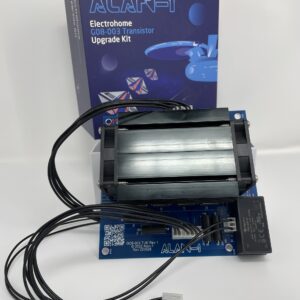
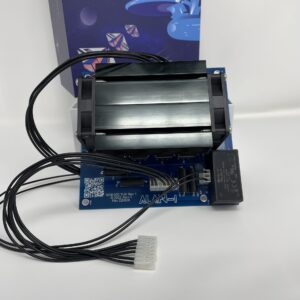
Since our new Wells-Gardner 6100 XY Deflection Board requires our Transistor Upgrade Kit, we’re offering a $50 discount when you buy them both together! For a detailed product description of each, see their product pages here: Wells-Gardner 6100 XY Deflection Board Transistor Upgrade Kit This combination will not only get your Wells up and running […]
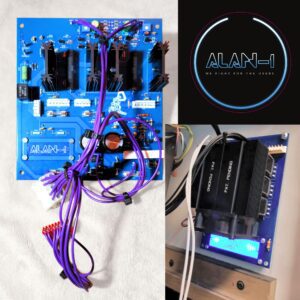
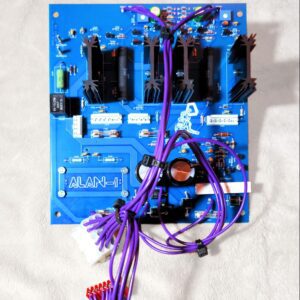
We've designed and built the perfect drop-in replacement for the Wells-Gardner 6100 XY deflection board. It’s complete, and it’s plug and play. No soldering is required. Just pull your old Wells deflection board, install this one in the same place on the chassis with the same mounting screws, connect all the connectors, pair it with the Alan-1 transistor upgrade kit – and your Wells color vector monitor is back in service. Our Alan-1 6100 deflection PCB includes the 12-pin Molex connector, the single-pin connectors for the spot killer and degauss coil, and everything else required to drop into an original Wells-Gardner 6100 Color XY "Quadrascan" monitor. We’ve added X and Y picture size adjustments. We've added much better heatsinks. We’ve streamlined the circuit for better long-term reliability. We've removed the low voltage section entirely, for improved lifetime performance and rock-solid stability. (This is why you must also install our Alan-1
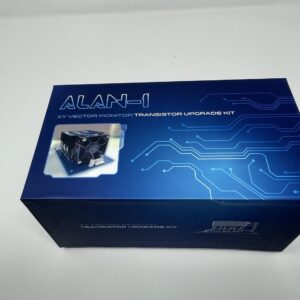
Update 2/2022: Our Star Wars has now completed nearly three years on location without a single deflection board failure, thanks to the Transistor Upgrade Kit. In fact, not a single game that we’ve upgraded with the TUK has since lost its deflection PCB! Why do WG 6100 deflection boards go down so often? Conventional wisdom has always said “it’s the connectors” or “it’s the low voltage supply.” But after running four vector games on location at our arcade, 10+ hours per day, for over three years, we realized that every time we’ve had a failure, the “bottlecap” case transistors have blown. We’re running the LV2000 on all of our deflection boards, but that doesn’t seem to make much of a difference: the bottlecaps still blow, and they still take the deflection board with them. Wells-Gardner uses the thin steel monitor case as a heat sink for the output transistors. This is a bad design: thin